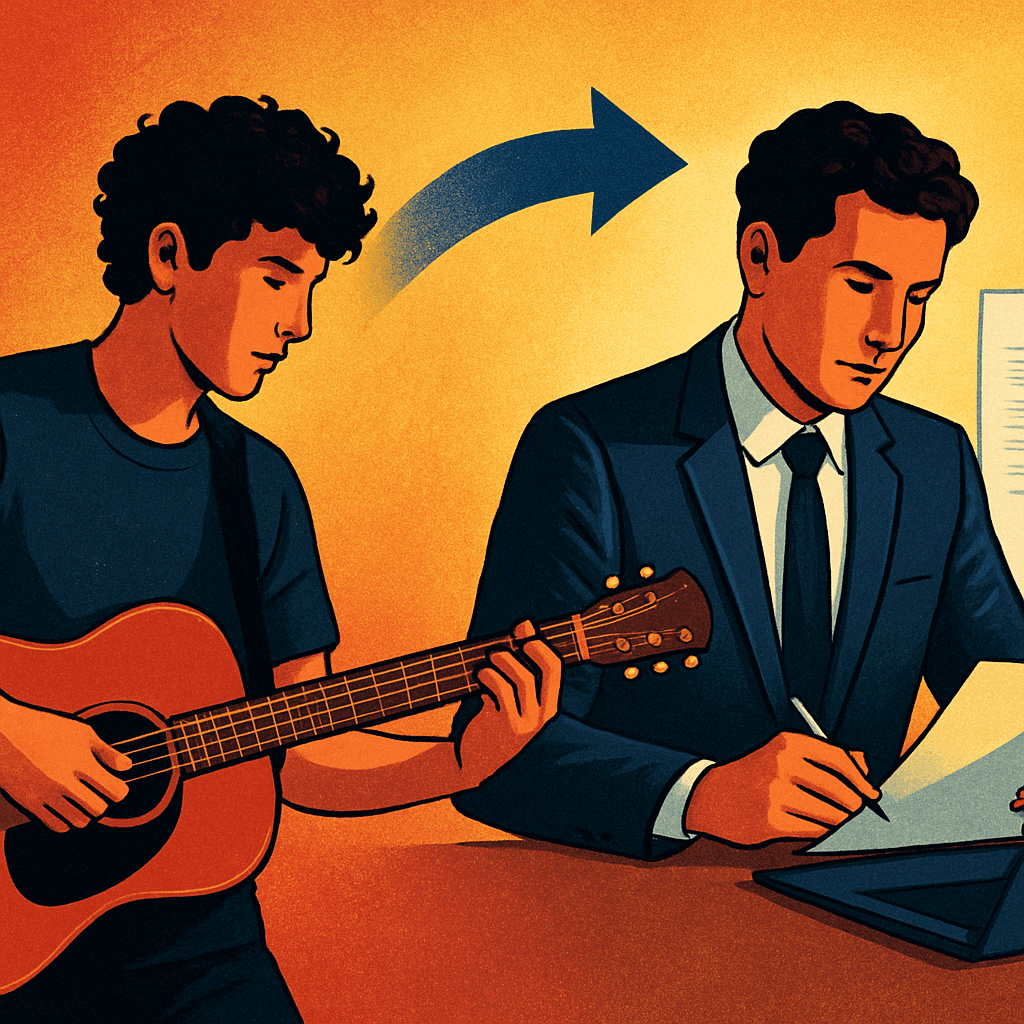
What Does a Music Publisher Actually Do? Your Questions Answered

If you are asking what is a music publisher and whether the trade-off is worth it for your songs, this FAQ gives a practical answer. You will get clear definitions of the publisher role, the royalty streams they handle, common deal types and splits, and real steps to audit, register, or recover publishing income. Short, actionable answers make this useful if you need to evaluate offers or fix missing royalties quickly.
What is a music publisher and what do they do
Your money is probably already out there somewhere. If a streaming payment, radio play, or sync fee never reached you, a music publisher is the specialist who finds it, claims it, and turns it into income that gets delivered to your account. In short, what is a music publisher: a company that manages the copyright side of songs, handles registrations and metadata, negotiates licenses, and collects publishing royalties on your behalf.
Core functions publishers actually perform
- Copyright management: register your compositions with collection societies and file ISWC information so money is claimable.
- Metadata and splits: fix and maintain the information attached to your song, including songwriter shares and publisher names, which determines who gets paid.
- Licensing and pitching: negotiate sync licenses, mechanical licenses, and custom deals for commercials, TV, and games.
- Royalty collection and distribution: work with PROs, mechanical bodies, DSPs, and foreign sub-publishers to gather performance, mechanical, and sync income and pay you after their fee.
- Exploitation and A&R: actively pitch songs to music supervisors and advertising agencies and sometimes place songs with artists or TV shows.
How this differs from a record label or a PRO. A record label handles the sound recording and artist services. A performance rights organization is just a collector that tracks public performances in its territory. The publisher focuses on the composition right worldwide and on licensing uses that need the songwriter permission.
Practical limitation you need to know. Publishers are not demand engines that guarantee placements. Their value is real when they fix metadata, open foreign collection channels, and have active sync relationships. If a publisher cannot demonstrate those capabilities, you may give up rights for little return. Administration deals keep your ownership and are usually safer for writers early in their careers.
Concrete example: You co-wrote a song used in a European commercial. An independent music publisher registers the song with your PRO, The MLC in the US, and a sub-publisher in France, ensures the splits are correct, issues a sync license to the agency, collects the sync fee, and then collects performance royalties each time the commercial airs. You receive payments net of the publisher fee or split according to your contract.
Judgment that matters. The real dividing line between a helpful publisher and a harmful one is transparency and metadata competence. Good publishers show you registrations, reporting cadence, and how they fixed lost income. Bad publishers ask you to sign away rights then leave registration tasks incomplete.
If your metadata is messy, even the best publishing deal will underperform. Fix splits and registration first, then evaluate offers.
Which royalty types does a music publisher handle
The money your songs already earned but never reached you usually falls into a few clear royalty buckets. A music publisher is involved with the composition-level income: performance royalties, mechanical royalties, and sync fees. How that money arrives depends on territory, the platform that used the song, and the publishing deal you signed.
How the main royalty types map to collectors and registrations
| Royalty type | What it is | Who usually collects | Where you must register |
|---|---|---|---|
| Performance royalties | Payment for public performance or broadcast of the composition - radio, TV, live venues, interactive streams. | Performance Rights Organizations (PROs) such as BMI or ASCAP. Publishers often split or collect the publisher share and submit usage to PROs. | Register writers and publishers with a PRO; ensure correct splits and ISWC. |
| Mechanical royalties | Payment for reproducing the composition - downloads, physical sales, and interactive streaming mechanicals. | In the US mechanicals flow through The Mechanical Licensing Collective (The MLC) and publishers or mechanical licensing agencies elsewhere such as the Harry Fox Agency. | Register compositions with The MLC or your local mechanical licensing body and keep metadata current. |
| Sync fees | One-time fee for licensing the composition to visual media - TV, ads, games, films. | Negotiated and paid directly to rights holders. Publishers handle licensing and fee splits unless you retained full control. | No single registry. Confirm publisher contact and ownership, and get written sync agreements. |
| Print royalties | Sales or licenses of sheet music and lyric prints. | Publishers or specialist print publishers. | Register rights and set up print licensing channels. |
| Neighboring rights / Master use | Payment for use of a specific sound recording or performers, not the composition. | Usually collected by labels or neighbouring rights societies; publishers do not typically collect these unless they also control the master. | Register with neighbouring rights societies if you are a performer or label owner. |
Practical tradeoff to know: publishers are the people who will register, chase, and license the composition across these pockets of income, but collecting globally is patchy.** You can keep 100 percent of publishing if you self administer, but that costs time and means you must navigate PRO registrations, The MLC filings, and international sub-publisher networks. If you sign an administration deal you pay a fee but gain coverage; a full deal hands more control to the publisher and usually reduces your share.
- Metadata matters more than optimism: incorrect songwriter names, missing ISWC, or wrong percentage splits are the usual reasons income never arrives.
- Territory quirks matter: what the PRO or mechanical body pays and how fast they pay differs by country. Mechanical streaming in the US is processed by The MLC; in other countries different collecting societies or agencies handle it.
- Sync is the highest leverage but the least predictable: publishers can license sync and split fees, but good placement requires active pitching and relationships - that is the service you are buying when you give away a larger share.
Concrete example: You land a placement in a European streaming series. The production pays a sync fee upfront to the publisher, who negotiates the split and issues licenses. After the episode airs, PROs in the broadcast territories report performance, and your publisher ensures your share is claimed with those PROs. Meanwhile streaming platforms generate mechanical payments routed through The MLC in the US and local mechanical agencies in Europe, and those must match the composition metadata the publisher registered.
Important: Publishers do not magically collect everything. Missing registrations and messy metadata cause the majority of lost publishing income.
Next consideration: if you are unsure which pockets of income you are missing, start with your PRO and The MLC registrations and then decide whether to keep administering yourself or hire a publisher to scope international collection and licensing.
Common publisher deal types and what each means for creators
Straight answer: when you ask what is a music publisher the first real decision is which deal you sign. Deal type determines who owns what, how fast you get paid, and how much of your income a publisher keeps. Pick the wrong one and you trade long-term royalty streams for a short-term advance.
Deal types you will see and what they really cost you
- Full publishing deal: Publisher takes the publisher share (typical industry split is writer share 50 and publisher share 50) and often receives the publisher role for administrating the catalogue. Typical economics: writer ends up with 50 total (writer share) while publisher keeps 50. Tradeoff: you get an advance and active exploitation but you give away long-term publisher income and possibly control. Good if you need upfront money and the publisher has placement reach you lack.
- Co-publishing deal: You keep part of the publisher share. Typical example: a 50 50 co-pub on the publisher share results in you getting 75 total (50 writer share + 25 retained publisher share) and publisher gets 25. Tradeoff: better long-term income than full deals, but publishers still take a cut and may control licensing decisions.
- Administration deal: You retain ownership; admin handles registration, collections, and licensing for a commission (usually 10 20 percent). Tradeoff: you keep most revenue and control, but you must handle strategy and approvals or pay extra for pitching and sync prep. Best for creators who want ownership and have some placement traction.
- Sub-publishing: A foreign territory arrangement where a local sub-publisher collects and exploits your songs overseas for a commission (typically 10 25 percent in that territory). Tradeoff: necessary for solid foreign collections but adds another layer of commissions and sometimes slow, opaque accounting.
- Single-song or project deals: Short-term deals limited to one song or EP. Tradeoff: lower commitment and useful for testing a publisher, but read term and reversion clauses closely; some single-song deals slip into catalogue control.
- Catalogue acquisition / buyout: Publisher buys your copyright outright for a lump sum. Tradeoff: immediate cash but you lose all future income and control. Only take this if you need capital or are exiting the catalogue.
Practical negotiation points: insist on clear term length, territory limits, audit rights, reporting cadence, and who pays recoupable costs. Ask whether advances are recouped from both writer and publisher shares or only publisher share. If a publisher refuses an audit clause, that is a red flag.
Concrete example: a mid-career songwriter with 100 recorded songs is offered a full publishing deal with a 20 000 advance. If publisher takes the full publisher share (50) they also control licensing; over 10 years the catalogue could easily earn 100 000 in publisher-share income. Taking the advance trades a likely six-figure future for 20 000 now. An administration deal at 15 percent would let the songwriter keep nearly all that future income while still getting registration and collections.
What people misunderstand: many think a publisher will magically place songs in TV and films. In practice, placement needs relationships, active pitching, and metadata that is flawless. Administration-only providers can collect missed royalties and register works efficiently, but they rarely do heavy creative pitching unless you pay extra or the catalogue fits their sync network.
Next consideration: before you sign, get simple numbers from the publisher: estimated annual publisher-share earnings, examples of recent syncs they secured, and sample statements. If those numbers do not exceed the advance or commissions you are being asked to give up, walk away.
How publishers find sync placements and negotiate licenses
You probably have tracks that could be licensed, but they will not be heard by a music supervisor unless someone pitches them correctly. A publisher's job here is not magic — it is targeted pitching, clearing rights quickly, and holding the paperwork and metadata that make supervisors comfortable licensing your song.
Where publishers source sync opportunities
Direct relationships matter most. Major and mid-size publishers keep contact lists of music supervisors at production companies, ad agencies, and TV/film studios and send curated lists for briefs. Smaller independent publishers and sync agents build niches — documentaries, indie films, or commercials — and hunt specific briefs where your track fits.
- Music supervisors and production houses: the primary buyers who need songs that match a scene or mood.
- Advertising agencies and creative houses: they look for hooks and clean-rights tracks, often with tight timelines.
- Sync libraries and pitching platforms: marketplaces like Musicbed and direct pitching platforms that speed discovery but tend to commodify tracks.
- Sub-publishers and international reps: handle placements in territories where the main publisher has no on-the-ground presence.
How negotiation and clearance actually work
Negotiation is a mix of use, control, and speed. A license asks three questions: what part of the song, what media and territory, and for how long. Publishers sell the composition right; the master right must be cleared separately if someone else owns the recording.
- Fee basis: sync fees range from a few hundred dollars for micro-licences to low six figures for prime broadcast or campaign placements.
- Split and control: publishers typically take the publisher share of the sync fee and split writer income according to agreed splits — know whether the publisher expects a commission or full publisher share.
- Exclusivity and term: longer or exclusive licenses pay more but reduce future opportunities; short-term non-exclusive is common for ads and promos.
- Cue sheets and reporting: accurate metadata and timely cue sheets are required for performance royalties later; if a publisher handles cue sheets, you get performance money in addition to the sync fee.
Practical trade-off: majors bring scale and often direct supervisor relationships, which increases placement chances but usually mean stricter approval terms and lower net to you. Independent publishers or admin deals offer faster approvals and higher splits but require you to provide clean metadata and master clearance quickly.
Concrete example: An independent publisher pitched a producer's up-tempo instrumental to a streaming series; because the producer controlled both composition and master, the publisher cleared both rights in two days and secured a six-figure regional campaign license. If the master had been owned by a third party, that deal would have stalled or paid less because of added clearance risk.
Key point: clean metadata, signed split sheets, and who controls the master will make or break a sync opportunity — not how many followers you have.
Next consideration: when evaluating offers, ask how the publisher will pitch your songs, who signs masters, and how quickly they can clear rights — those answers predict whether a pitch becomes money or just a lost lead.
Practical steps to audit and recover missing publishing royalties
Start where the money should be. The most common reason you are missing publishing royalties is bad metadata or incorrect splits, not mysterious corporate theft. If you can produce a clear list of your songs and who owns what, you can recover most unpaid streams and broadcasts yourself or with a targeted audit.
Step by step audit checklist
- Inventory your catalogue: Create a single spreadsheet with song title, writers, publisher name, claimed split percentages, ISWC, ISRC, release date, and where the recording is distributed.
- Verify registrations: Check that each song is registered with your PRO and with The MLC in the US. Use BMI or ASCAP account portals and The MLC searchable tools to confirm entries. Missing or inconsistent entries are the first leak.
- Match DSP metadata: Compare the catalogue sheet to metadata on streaming platforms. If a distributor or label uploaded wrong writer or publisher fields, ask them to correct it. Small changes here fix large gaps in royalty flow.
- Collect evidence: Gather split sheets, signed songwriter agreements, publishing contracts, and release receipts. Scanned PDFs with dates are fine. These are the documents PROs and societies will require for claims.
- File disputes and claims: Submit claim forms to the relevant PROs, The MLC, and foreign societies. Attach your evidence and clearly state the correct ISWC and splits. Track each claim in your spreadsheet with dates and reference numbers.
- Run a focused audit if needed: If your catalog spans multiple territories and you find many mismatches, run a professional royalty audit or free audit to spot cross-border leaks. For a starter option, consider a free audit such as UniteSync free audit.
- Collect and reconcile payments: Once claims are accepted, expect back payments to be processed over several distribution cycles. Save statements and update your master spreadsheet so you do not refile the same claim.
Practical tradeoff: If you have fewer than 20 songs and the suspected recoverable amount is small, do the above yourself. If the catalogue is larger, has international plays, or multiple co-writers with conflicting registrations, a paid audit or administrator often recovers more net income after fees than a solo effort.
Timing and limits to expect. Every collection society has different lookback windows and processing times. Some foreign societies can take many months to confirm a claim. Act fast on unclaimed income because delays can narrow recovery windows and complicate evidence collection.
Important: Most recoveries come from fixing metadata and splits, not from legal threats. Keep split sheets and register each new song before release.
Concrete example: A producer discovered a co-written song was registered only under the co-writer's publisher in several territories. After submitting signed split sheets and corrected ISWC data to the affected PROs and The MLC, the societies recalculated distributions and paid outstanding performing and mechanical royalties. The process took around nine months from first claim to final distribution.
What people miss in practice. Creators often assume a publisher must be the one to recover money. That is not true for all cases. You can reclaim a lot yourself, but you must be methodical. Hiring a publisher or auditor makes sense when the recovery requires cross-border contacts, retroactive licensing, or negotiation where local sub-publishers matter.
When to sign with a publisher and how to evaluate offers
Sign only when a publisher gives you capabilities or reach you cannot reasonably replicate yourself. If you can register songs correctly, reconcile splits, and collect PRO and mechanical income reliably, an administration deal is often unnecessary. A publisher should add measurable value: faster collections, real sync placements, or scale in territories where you are invisible.
A practical decision framework
Evaluate offers across three dimensions: what they will actively do for your songs, how money flows and who keeps what, and how long you are locked in. If one of those boxes is weak, the deal probably costs you more than it gives.
- Deliverables: Will they register ISWCs, file splits correctly, and fix past metadata gaps? Will they pitch to music supervisors and sync agencies or just wait for opportunities to show up?
- Economics: Is there an advance, what split do they take, and is the advance recoupable against writer or publisher share? Ask for worked examples using your current income levels.
- Control & term: Are you granting exclusive assignment or only administration? How long does the contract run and what are the reversion conditions?
- Reporting & audit rights: How often will you get statements, in what detail, and can you audit them? Lack of audit rights is a major red flag.
- Territories & sub-publishing: Do they cover global collection or rely on sub-publishers with extra fees? Territory coverage matters if you earn abroad.
- Termination costs: Are there exit fees, or does the publisher keep earnings for activity after termination?
Practical tradeoff to understand: an exclusive full publishing deal converts future income into an upfront advance and the publisher's exploitation effort. That can be right if you need upfront cash and the publisher has proven sync or placement capability. It is wrong if your catalog already earns modest steady royalties because you will likely earn less long term after giving up a big share.
Concrete example: You have a 25-song catalog that currently earns about $2,000 a year in publishing income. A full publishing offer gives a $15,000 advance and takes 50 percent of publishing. That advance sounds attractive, but at $1,000 a year less in recurring income, it takes 15 years to match the advance simply on lost annual earnings, not counting sync upside you may never see. An administration deal charging 15 percent would keep your income flowing and preserve long-term upside, while costing far less up front.
Questions to ask a prospective publisher
- How specifically will you promote my songs for sync and how many placements did you secure last year in my genre?
- What exact split will I keep and what percentage do you take for administration, sync negotiation, and sub-publishing fees?
- Is the advance recoupable only from the publisher share or from both writer and publisher shares?
- How often do you report and what level of detail will statements show? Can I audit the books and at what cost?
- Which territories do you register in, and do you use sub-publishers there? Name the sub-publishers.
- What are the term length, early termination conditions, and reversion timelines for rights?
Red flag: Vague promises about sync placements, no audit rights, or a clause that lets the publisher recoup the advance from both halves of the writer split.
AUTHOR

Charly
Carlos Palop is a seasoned music publishing expert, adept in rights management and royalty distribution, ensuring artists' works are protected and profitably managed. Their strategic expertise and commitment to fair practices have made them a trusted figure in the industry.